Authorization disclaimer. This walkthrough is exclusively for the intentionally vulnerable PortSwigger Web Security Academy lab linked below. Only test systems you own or are explicitly authorized to assess.
Overview
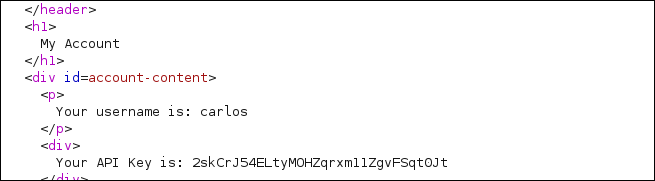
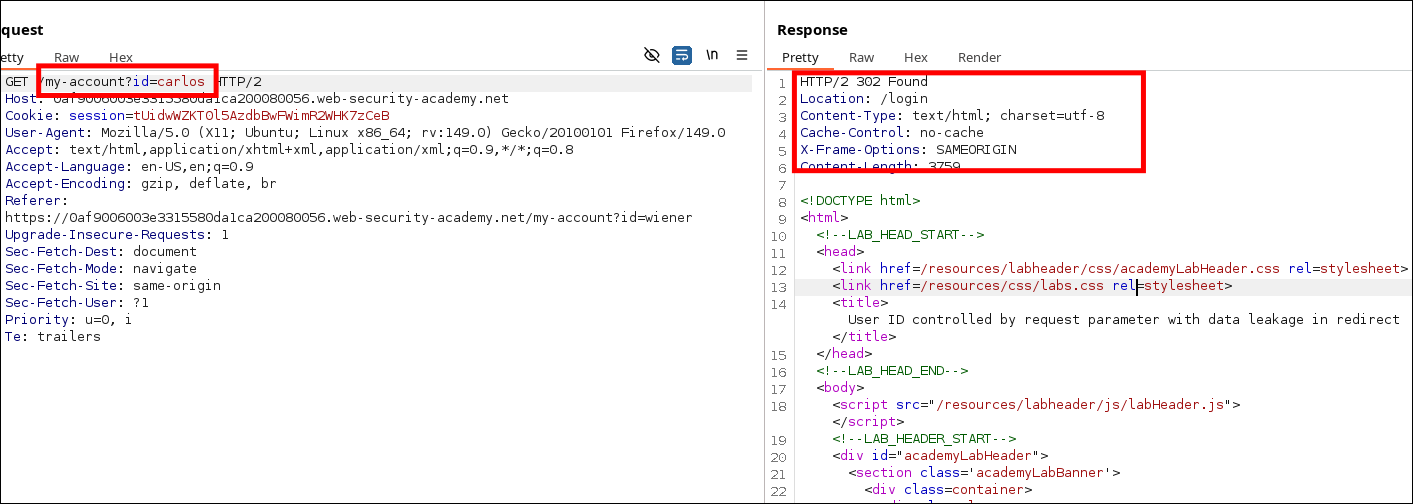
Changing the account identifier to carlos triggers a 302 Found response, so a browser appears to deny access by immediately following the redirect. However, the original response body has already been populated with Carlos’s account data, including the synthetic API key.
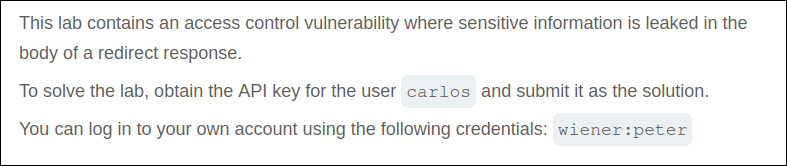
Lab objective/setup
Sign in with wiener:peter, obtain the synthetic API key belonging to carlos, and submit it through the lab interface.
What I observed
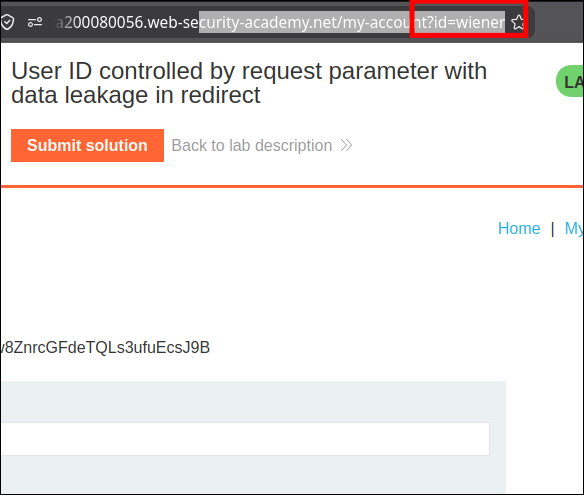
The account page used GET /my-account?id=wiener. Replacing the identifier with carlos caused the browser to leave the page, which initially looked like successful enforcement. Inspecting the exchange in Burp Repeater showed the important detail: the 302 response still contained the unauthorized account HTML.
Why it is vulnerable
A redirect is navigation metadata, not an authorization boundary. The application renders sensitive data before deciding to redirect, and HTTP clients can always inspect the first response. An unauthorized request must be rejected before protected data is loaded or serialized.
Walkthrough in the authorized PortSwigger lab
- Log in as
wienerand capture the account request. - Send it to Repeater and change the
idparameter tocarlos. - Do not follow the redirect automatically; inspect the body of the
302response. - Copy the synthetic API key present in that body and submit it to the lab.
Verification
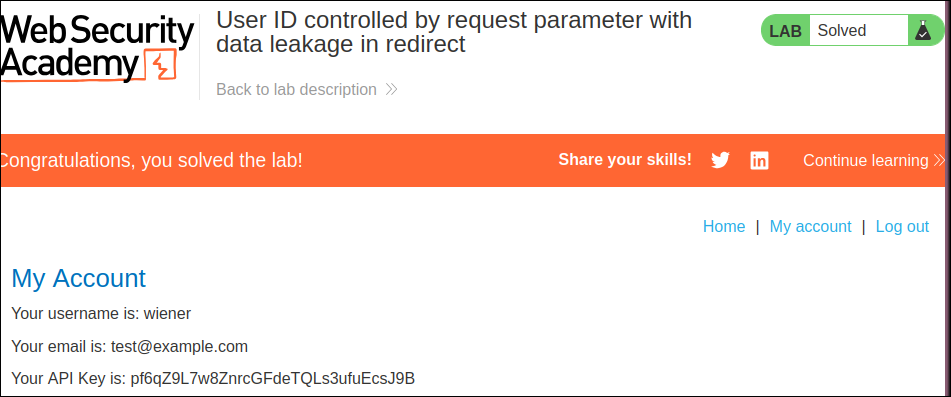
The unauthorized request returns a redirect, yet its raw body contains Carlos’s data. Successful submission of the included lab key confirms that the leak occurs before the redirect is followed.
Impact and defensive lesson
This pattern can expose API keys, personal records, or account metadata while remaining invisible in ordinary browser navigation. Perform authorization before fetching or rendering an object, return a minimal error response, and test raw redirect bodies during security reviews.